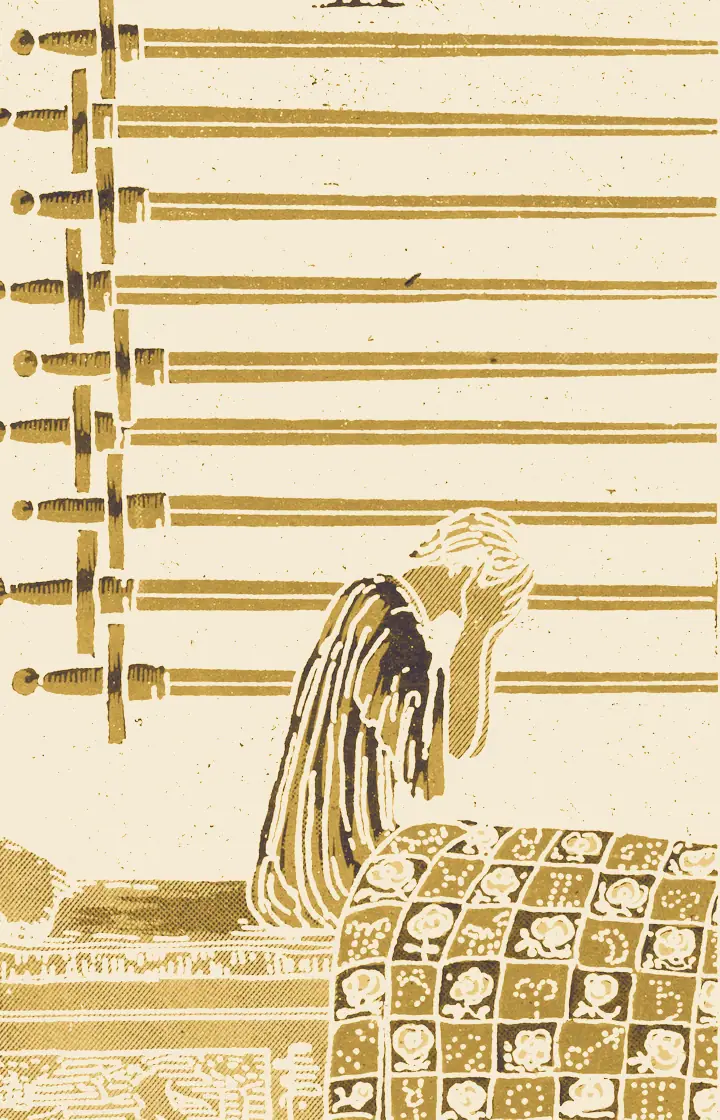
Nine of Swords
Create or link your account to save favorite cards. Sign in
- anxiety
- insomnia
- fear
- dread
- worry
Overview
The Nine of Swords is the card of three in the morning, when your head will not switch off and everything looks worse than it is. You know the feeling: you turn a debt, an argument, or a fear over and over, and in the dark it swells until it is huge, far bigger than it will look tomorrow in full daylight. When this card appears, it points to a worry stealing your sleep and your calm. It does not come to scare you more, it comes to remind you that fear shouts louder at night. Turn on the light, name what terrifies you, and measure it against facts: it is almost never as enormous as insomnia paints it.
Upright
It is three in the morning and your head will not stop. You turn something over until it grows huge, far bigger than it is in daylight. Fear shouts louder at night. Turn on the light, write down what terrifies you, and measure it: it is almost never that giant.
Reversed
The dread begins to loosen when you finally name it and say it out loud to someone. Or the reverse, you sink further and the dark thought swallows the rest. If you have had nights like this, telling it is not weakness, it is the first crack where air gets in.
In love
Fears firing off in your head: jealousy with no proof, breakup scenes that have not happened. Before you accuse or pull away, check what is real and what your anxiety has staged. Asking usually hurts less than imagining.
In work
Losing sleep over a deadline, the fear of being exposed as not good enough, a mistake you replay a thousand times. Your head inflates the risk. Drop to the concrete fact: what is truly missing and what is just night panic.
In money
In money matters, the Nine of Swords speaks of losing sleep over money: the bill circling your mind, the fear of not making it, the sum you redo a thousand times in the dark. The dread tends to inflate the risk well beyond what is real. Upright, it asks you to bring the worry down to concrete numbers: what you truly owe, by when, and what you can do tomorrow. Reversed, the knot begins to loosen once you talk it through with someone. Worrying all night pays off no debt; a small, clear plan does.
In health
For health, this card points straight at insomnia, anxiety, and a mind that attacks itself once the world goes quiet. The body registers it: you wake up drained, chest tight, guard up. The most useful move is to get the fear out of your head and put it outside: write it down, say it aloud, tell someone you trust. Naming the worry is the first crack where air gets in. And if nights like this keep repeating, asking for help is not weakness, it is looking after yourself.
Yes or no?
No, though with an important nuance. The Nine of Swords leans toward no because it arrives loaded with fear and sleeplessness, but much of that no comes from your dread, not from the facts. Drop to the concrete detail and check: reality is usually less grave than what you fear at night.
The card's advice
Turn on the light and get the fear out of your head. The Nine of Swords reminds you that everything grows in the dark, so do not trust what you think at three in the morning. Write down what torments you, split it into what is real and what your mind has staged, and leave it for tomorrow. Almost always, in daylight, the monster shrinks. And if you cannot do it alone, telling someone does not take your strength, it gives it back.
Symbolism
In the image, someone sits up in bed in the middle of the night and brings both hands to the face, like waking from a nightmare and being unable to fall back asleep. Behind, nine swords hang in a row on the wall, but they do not touch the figure: the danger is not in the room, it is in the head. The bed is fine and the blankets well kept, a sign that the torment comes not from outside but from within. The whole scene captures that night dread that feeds itself, made of apprehensions and of scenes that have not happened and maybe never will.
Astrological correspondence
Gemini in its second decan, with Mars: the mind that attacks itself at night. Mars sharpens the fear to a size it does not deserve; thought turns into a weapon and points it at you.
Combinations
Next to the Eight of Swords, the fear joins the sense of being trapped, and the mind raises walls out of insomnia. With The Moon, the apprehensions fire off and it gets even harder to tell the real from the imagined. Next to the Ten of Swords, you fear an ending you think is inevitable, though the other card reminds you the worst may already be behind. And with The Sun, relief arrives: daylight dissolves what the night had inflated.
Frequently asked questions
What does the Nine of Swords mean in tarot?
It represents anxiety, insomnia, and fears that grow at night. It is the three in the morning card, when the head inflates problems far beyond their real size.
Is the Nine of Swords always bad?
Not as bad as it looks. It is uncomfortable, but also a good warning: much of the suffering is internal and exaggerated. Brought into daylight, the worry almost always shrinks.
What does the Nine of Swords mean in love?
Fears firing off in your head: jealousy with no proof, or breakup scenes that have not happened. Before you accuse or pull away, check what is real and what your anxiety has staged.
How do you calm the Nine of Swords energy?
By getting the fear out of your head: write it down, measure it against facts, or tell someone you trust. Naming the dread out loud is the first crack where calm returns.